Product Overview
Malic Acid is a naturally occurring dicarboxylic organic acid found abundantly in apples, grapes, cherries, and most fruits it is the compound responsible for the characteristic tartness of green apples and unripe fruit. Its chemical formula is C4H6O5, its systematic name is 2-hydroxybutanedioic acid, its food additive code is E296, and its CAS number is 6915-15-7. It exists in two stereoisomeric forms: L-Malic Acid, which is the naturally occurring, biologically active form found in all living organisms; and DL-Malic Acid, the racemic mixture of both L and D forms produced by chemical synthesis from maleic anhydride.
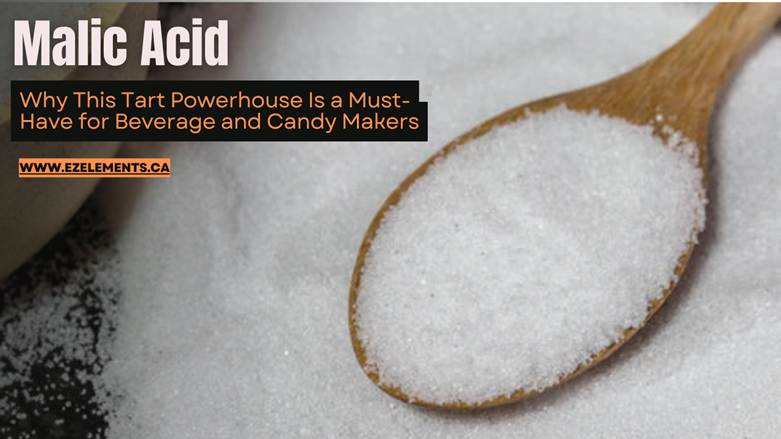
EZ Elements supplies food-grade Malic Acid as a white, free-flowing, non-hygroscopic crystalline powder with a clean, intensely tart, and lingering sour taste profile that distinguishes it from other food acids. Unlike citric acid, whose tartness peaks quickly and fades, malic acid provides a slower-building, more persistent sourness with a clean, fruity character that makes it particularly well-suited for beverage, confectionery, and candy applications where sustained flavor impact throughout the eating and drinking experience is the goal. It is GRAS classified by the FDA, approved as E296 internationally, and used across food, beverage, personal care, pharmaceutical, pet care, industrial, and cleaning applications.
Key Features & Benefits
- Provides a unique tart taste profile slower onset, more persistent, and fruitier than citric acid, making it the preferred acidulant in beverages and sour candy requiring lasting sourness.
- Non-hygroscopic crystalline powder does not absorb moisture from the air, making it the preferred food acid for dry powdered beverage mixes, instant drink packets, and dry seasoning formulations.
- GRAS classified by the FDA and approved as E296 internationally accepted across food, pharmaceutical, personal care, and industrial regulatory frameworks.
- Highly water-soluble (55.8 g per 100 mL at 20 degrees C) enabling complete and rapid dissolution into beverage, food, and formulation systems.
- Flavor enhancer beyond simple sourness complements and intensifies fruit flavors, rounds off sweetness, and improves the overall flavor impact of many food and beverage formulations.
- Antioxidant synergist malic acid chelates trace metal ions that catalyze oxidative degradation, synergistically protecting ascorbic acid and other antioxidants in food and beverage systems.
- pH buffer and color stabilizer malic acid maintains target pH and protects anthocyanin-based natural colors from degradation in acidic food and beverage products.
Applications
Malic Acid food grade is used across six industry categories served by EZ Elements.
- Carbonated soft drinks, energy drinks, sports drinks, and flavored water products where its lingering tartness provides a more natural, fruit-forward flavor profile than citric acid alone
- Powdered beverage mixes, instant drink packets, electrolyte powders, and dry lemonade mix its non-hygroscopic property prevents powder caking and maintains free-flowing consistency in dry formats
- Sour candy coatings, hard candy, gummy candy, sour belts, and confectionery where extremely intense, persistent sourness is the desired consumer experience
- Wine and cider acidification malic acid is a natural component of grape juice and is used to adjust titratable acidity in winemaking; malolactic fermentation converts malic acid to the softer lactic acid, influencing wine style
- Fruit preparations, jams, jellies, and fruit-based spreads where it balances sweetness, brightens flavor, and enhances the natural fruit character of the finished product
- Baked goods including fruit-flavored cakes, muffins, and pastries where its fruity acid note complements fruit ingredients and flavors
- Dairy and dairy-alternative products including fruit-flavored yogurt, smoothies, and acidified milk beverages where its clean acid note complements fruit flavors
- Synergistic acid blend with Citric Acid malic and citric acids are frequently blended in beverages and confectionery to achieve a more complex, rounded, and persistent sour flavor profile than either acid provides alone
- pH adjuster and pH buffering agent in skin care formulations including toners, exfoliating treatments, and serums maintaining target formulation pH with precision
- Alpha-hydroxy acid (AHA) activity in exfoliating skin care products malic acid contributes mild exfoliation and skin-renewal benefits alongside other AHAs such as glycolic and lactic acid
- Antioxidant synergist protecting sensitive personal care actives and oil phases from metal-catalyzed oxidative degradation through chelation of trace pro-oxidant metals
- Self-tanning formulations where malic acid acts as a pH adjuster supporting optimal DHA activity for even, natural-looking color development
- Hair care pH adjustment in shampoos, conditioners, and chemical treatment formulations requiring precise pH control for product stability and performance
- Pharmaceutical-grade effervescent tablet formulation as an acid component that reacts with sodium bicarbonate to produce the CO2 dissolution effect
- Oral pharmaceutical liquid formulations as a flavoring agent providing tartness and improved palatability in syrups, suspensions, and elixirs
- Dietary supplement tablets and capsules where malic acid is included for its role in the citric acid (Krebs) cycle, energy metabolism support, and fibromyalgia research applications
- pH adjuster in topical pharmaceutical formulations maintaining optimal pH for active stability and skin compatibility
- Iron and mineral supplement formulations where malic acid chelation improves mineral bioavailability and absorption in dietary supplement products
- Animal feed and pet food acidulant for pH control and flavor enhancement in wet pet food, treats, and fermented animal feed formulations
- Pet shampoo and grooming product pH adjustment malic acid is used in natural pet shampoo formulations to achieve an animal skin-compatible pH range
- Pet dietary supplement formulations where malic acid supports palatability and pH management in liquid and powder supplement products
- Descaling agent for removing limescale, calcium carbonate, and mineral deposits from household appliances, fixtures, and food processing equipment as a food-safe organic acid cleaner
- Bathroom and kitchen surface cleaner formulations where its chelating and mild acid properties dissolve mineral buildup and soap scum
- Rust and mineral stain removal from stainless steel surfaces in food manufacturing and household applications
- Metal surface cleaning and passivation applications leveraging its chelating properties to remove metal oxides and improve surface preparation
- Textile and fabric dyeing process acid where malic acid adjusts bath pH and acts as a chelating agent for dye uptake
- Oil field applications as a chelating agent for scale inhibition and treatment in well completion and stimulation operations
- Biodegradable polymer and bioplastic research as a building block monomer for bio-based polymer synthesis
Technical Specifications
| Property | Specification |
| INCI Name | Malic Acid |
| CAS No. | 6915-15-7 (DL-Malic Acid); 97-67-6 (L-Malic Acid) |
| Chemical Formula | C4H6O5 |
| Food Additive Code | E296 |
| Common Name | Malic Acid, Apple Acid, 2-Hydroxybutanedioic Acid |
| Appearance | White, odorless, free-flowing crystalline powder |
| Assay (Purity) | 99.0% minimum (food grade) |
| pH (1% Solution) | 2.0 to 2.5 (strongly acidic) |
| Solubility | Freely soluble in water (55.8 g per 100 mL at 20 degrees C); soluble in ethanol |
| Hygroscopicity | Non-hygroscopic — does not absorb moisture from environment |
| Relative Acidity | Stronger and more persistent tartness than citric acid; gentler than tartaric acid |
| Melting Point | 128 to 130 degrees C (DL form); 100 degrees C (L form) |
| Molecular Weight | 134.09 g/mol |
| Origin | Produced by chemical synthesis from maleic anhydride (DL form) or by enzymatic/fermentation methods (L form) |
| Regulatory Status | GRAS (FDA); E296 (EU); FCC compliant; approved in major international food regulatory frameworks |
Why Choose EZ Elements as Your Supplier
EZ Elements supplies food-grade Malic Acid with consistent purity, reliable crystal quality, and complete documentation to support food manufacturers, beverage producers, confectionery makers, personal care brands, pharmaceutical formulators, and industrial users across Canada and North America.
We supply beverage manufacturers, candy and confectionery producers, winemakers, personal care formulators, pharmaceutical companies, and cleaning product developers, providing:
- Full documentation including Technical Data Sheet (TDS), Certificate of Analysis (COA), and Safety Data Sheet (SDS)
- Food-grade specification with 99.0% minimum purity meeting FDA GRAS, E296, and FCC requirements
- Bulk supply with transparent, competitive pricing per kilogram across all available pack sizes
- Technical support on use levels, flavor impact comparisons with citric acid, synergistic blending, pH targeting, and application-specific guidance
Safety & Storage Guidelines
- Store in a cool, dry, well-ventilated area away from direct sunlight, heat, and moisture although non-hygroscopic, sealed storage maintains product purity and free-flowing texture.
- Keep containers tightly sealed after each use to prevent contamination and maintain consistent product quality throughout the shelf life.
- Malic Acid is a mild irritant wear protective gloves and avoid inhalation of fine dust when handling in bulk production quantities.
- Avoid contact with eyes; rinse thoroughly with water if eye contact occurs and seek medical attention if irritation persists.
- Shelf life is typically 2 years from manufacture date when stored correctly in sealed, cool, dry conditions.
Complete handling, first aid, and disposal instructions are provided in the Safety Data Sheet (SDS) available from EZ Elements upon request.
Frequently Asked Questions
Q1: Which industries use Malic Acid?
Malic Acid food grade is used across six industries: Food and Beverages (primary acidulant and flavor enhancer in beverages, sour candy, confectionery, wine, fruit preparations, and dry mixes), Personal Care (pH adjuster, AHA exfoliant, antioxidant synergist, and self-tanning pH support), Pharmaceutical (effervescent tablet acid component, palatability enhancer in oral medicines, dietary supplement active, and mineral bioavailability support), Pet Care (pet food acidulant, pet shampoo pH adjustment, and supplement palatability), Cleaning and Sanitation (descaling agent for limescale and mineral deposit removal), and Industrial (metal passivation, textile dyeing, oil field chemistry, and bio-based polymer research).
Q2: How does Malic Acid compare to Citric Acid in food and beverage formulations?
Malic Acid and Citric Acid are both widely used food acids but differ meaningfully in their taste profile and formulation behavior. Malic Acid provides a slower-building, more persistent, and distinctly fruity tartness often described as apple-like or fruit-forward that lingers longer on the palate than citric acid. Citric Acid provides a faster, sharper, more intense initial sourness that fades more quickly. Malic Acid is typically perceived as smoother and more rounded. Importantly, Malic Acid is non-hygroscopic, making it the preferred choice for dry powder beverage mixes and instant drink packets where citric acid monohydrate can cause caking. Many beverage and confectionery manufacturers blend both acids typically in ratios of 1:1 to 3:1 citric to malic to achieve a complex, balanced, and persistent sour profile that neither acid provides alone.
Q3: What is the difference between L-Malic Acid and DL-Malic Acid?
L-Malic Acid is the naturally occurring, biologically active stereoisomer found in all fruits and produced by the human body as a metabolic intermediate in the citric acid (Krebs) cycle. DL-Malic Acid is the racemic mixture of L and D forms produced by chemical synthesis from maleic anhydride. Both forms are approved as food additives (E296) and used in food and beverage manufacturing. L-Malic Acid is preferred in applications where natural origin labeling is important, though it is generally more expensive. DL-Malic Acid is the more commercially available and cost-effective form for most food manufacturing applications.
Q4: Why is Malic Acid particularly valued in sour candy formulations?
Malic Acid is the preferred acidulant in sour candy because of its exceptional intensity and persistence of tartness at the concentrations used in candy coatings and candy body formulations. While citric acid provides an initial sharp sourness, malic acid provides the long-lasting, building sour sensation that makes sour candy distinctive the sensation that intensifies as the candy dissolves and that consumers associate with extreme sour candy experiences. Sour candy coatings often contain malic acid at very high concentrations of 5% to 15%, which is significantly higher than typical food formulation use levels. Its non-hygroscopic property also helps sour candy coatings remain free-flowing and non-sticky during production and packaging.
Q5: Can Malic Acid be used in wine production?
Yes. Malic Acid is a natural component of grape juice and is used in winemaking in two primary contexts. First, it is used to acidify grape must or finished wine to achieve target titratable acidity and pH important for wine stability, microbial safety, and flavor balance, particularly in warm-climate grape growing regions where grapes may be low in natural acidity. Second, malic acid is the substrate of malolactic fermentation a secondary bacterial fermentation in which malic acid is converted by lactic acid bacteria to the softer, less acidic lactic acid. This conversion is desirable in some red wine and full-bodied white wine styles for softening acidity, while it is deliberately prevented in crisp white wine styles to preserve malic acid natural freshness and tartness.
Q6: Where can I buy food-grade Malic Acid in bulk in Canada?
Food-grade Malic Acid is available for bulk purchase directly from EZ Elements, with supply options for food manufacturers, beverage producers, confectionery makers, winemakers, personal care brands, pharmaceutical formulators, and industrial users across Canada and North America. Contact our team for current pricing, documentation, and product samples.
Related Ingredients
The following EZ Elements ingredients are commonly used alongside Malic Acid in food, beverage, and personal care formulations:
- Citric Acid (Anhydrous) The most common food acid partner to Malic Acid; frequently blended in beverages, candy, and food formulations to create a complex, balanced sour profile combining citric acid’s fast initial impact with malic acid’s slower, more persistent tartness.
- Ascorbic Acid (Vitamin C) Food Grade Antioxidant that works synergistically with Malic Acid in food and beverage preservation; malic acid chelates trace metals that would otherwise catalyze ascorbic acid oxidation, extending the antioxidant efficacy of Vitamin C in juice and beverage formulations.
- Potassium Sorbate Antimicrobial preservative whose efficacy is enhanced by Malic Acid lowering formulation pH to the optimal range for sorbate activity; commonly combined in acidic beverages, confectionery, and fruit preparations requiring combined acidification and preservation.
Order or Enquire
Looking to buy Malic Acid food grade in bulk? Contact EZ Elements for current pricing, full product documentation, and supply options across food and beverage, personal care, pharmaceutical, pet care, cleaning, and industrial applications. We supply brands, manufacturers, and formulators across Canada and North America. Reach out today to request a sample, Technical Data Sheet, or a bulk pricing quote for your next project.