Product Overview
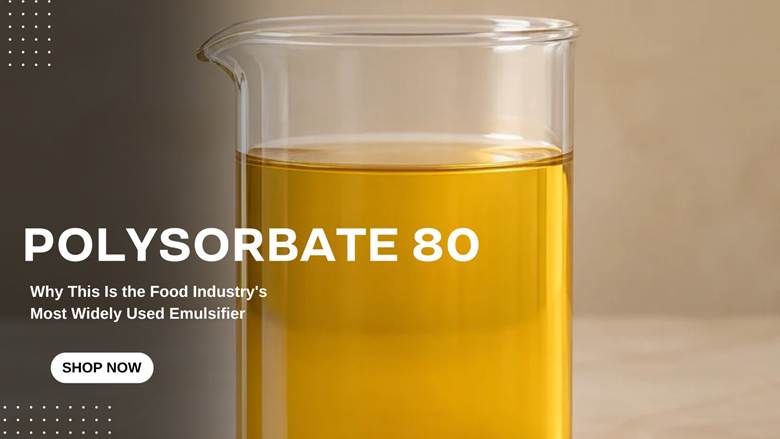
Polysorbate 80, chemically known as polyoxyethylene (20) sorbitan monooleate, is a non-ionic synthetic surfactant and emulsifier produced through the ethoxylation of sorbitan monooleate, the ester of sorbitol and oleic acid (a C18:1 unsaturated fatty acid primarily derived from plant oils). Its INCI name is Polysorbate 80, its food additive code is E433, its most widely recognized trade name is Tween 80, and its CAS number is 9005-65-6. It appears as a viscous, amber-colored oily liquid at room temperature with a mild characteristic odor, and has an HLB value of approximately 15.0.
Polysorbate 80 is the single most widely produced and commercially used polysorbate emulsifier globally, and among the most extensively used synthetic food additives in modern food manufacturing. Its dominance stems from a combination of properties that no other single emulsifier replicates: it is liquid at room temperature, unlike Polysorbate 60 which can be semi-solid; it has outstanding protein stabilization properties in pharmaceutical injectable formulations; it provides excellent emulsification of unsaturated oil phases in food products; and it is water-dispersible, enabling easy incorporation into both hot and cold processing systems. FDA-approved under 21 CFR 172.840, approved as E433 internationally, and accepted across food, pharmaceutical, personal care, and industrial regulatory frameworks, it is a foundational ingredient across multiple manufacturing sectors.
Key Features & Benefits
- Non-ionic emulsifier based on oleic acid (C18:1), liquid at room temperature providing superior handling convenience over semi-solid alternatives like Polysorbate 60.
- HLB value of approximately 15.0, strongly hydrophilic and effective for oil-in-water emulsification, flavor solubilization, and protein-surfactant interaction.
- Outstanding protein stabilization in pharmaceutical applications; Polysorbate 80 (Tween 80) is the most widely used protein-protective surfactant in biopharmaceutical formulations including vaccines and monoclonal antibodies.
- FDA-approved under 21 CFR 172.840 and E433 internationally with specific permitted food uses across multiple food categories.
- Liquid at room temperature enabling easy handling, dosing, and incorporation into both hot and cold manufacturing processes without melting steps.
- Excellent compatibility with a broad range of food ingredients, pharmaceutical actives, and personal care components across diverse formulation pH and temperature ranges.
- Synergistic performance with other emulsifiers including Polysorbate 60, sorbitan esters, and lecithin for combined fat crystal modification and emulsion stability.
Applications
Polysorbate 80 is used across six industry categories served by EZ Elements, the broadest industry footprint in the polysorbate family.
- Ice cream and frozen desserts, one of its primary food applications; controls fat destabilization during freezing, supports air incorporation, improves melt resistance, and produces dry scoopable texture
- Beverages including vitamin-fortified drinks, oil-in-water beverage emulsions, and flavor-oil solubilization in clear beverage formulations
- Bread and baked goods as a dough conditioner and anti-staling agent maintaining softness and freshness throughout commercial shelf life
- Shortening and margarine formulations as an emulsifier improving plasticity, aeration, and performance in creaming applications for cake batters
- Salad dressings, sauces, and condiment emulsions providing stable oil-water emulsion structure and preventing visible phase separation during storage
- Whipped toppings and dairy creamer products where its liquid form enables easy incorporation and it provides stable air-fat emulsion structure
- Flavor and vitamin oil solubilization in beverages, dairy products, and functional food formulations requiring transparent, stable distribution of lipophilic actives
- Confectionery and chocolate applications as a viscosity modifier and emulsifier during processing and coating operations
- Skin care emulsions, creams, and lotions as a non-ionic emulsifier contributing O/W emulsion stability and elegant skin feel
- Essential oil and fragrance solubilizer in toners, facial mists, bath oils, and transparent personal care formulations
- Shampoo, conditioner, and hair care products as an emulsifier improving ingredient compatibility and product texture
- Makeup remover, cleansing oil, and micellar water formulations where it emulsifies cosmetic oils and residues into the water phase for gentle cleansing
- Vaccine formulations; Polysorbate 80 (Tween 80) is the standard surfactant in numerous major vaccine formulations where it stabilizes the antigen protein against interfacial denaturation at container surfaces and air-liquid interfaces
- Monoclonal antibody and biologic drug formulations where protein aggregation prevention is critical for drug safety and efficacy throughout product shelf life
- Oral pharmaceutical liquid formulations as a solubilizer and emulsifier for poorly water-soluble active pharmaceutical ingredients improving bioavailability
- Topical pharmaceutical creams, ointments, and gels as a non-ionic emulsifier ensuring stable, uniform active ingredient distribution throughout the dosage form
- Nasal spray, ophthalmic drop, and mucosal drug delivery formulations where Polysorbate 80 improves solubilization and mucosal contact of active ingredients
- Industrial and institutional cleaning product formulations as a non-ionic surfactant improving grease emulsification, surface wetting, and cleaning performance
- Food contact surface cleaners where its food-safe profile makes it appropriate for use in food manufacturing environments
- Disinfectant and sanitizer formulations as an emulsifier stabilizing active ingredient distribution and improving surface contact
- Pet food emulsifier in wet and semi-moist formulations stabilizing fat-water systems and improving nutrient distribution and palatability
- Veterinary pharmaceutical formulations as an emulsifier and protein stabilizer in injectable and oral veterinary medicines
- Agricultural chemical emulsifier in herbicide, pesticide, and fungicide formulations improving active ingredient distribution and leaf surface adhesion
- Biotechnology and cell biology laboratory reagent; Tween 80 is a standard reagent in microbiology, cell culture, and molecular biology applications
- Textile processing lubricant and emulsifier in fiber spinning, fabric finishing, and dyeing operations
- Paint, coating, and ink formulations as a dispersant and emulsifier improving pigment distribution and product stability
Technical Specifications
| Property | Specification |
| INCI Name | Polysorbate 80 |
| CAS No. | 9005-65-6 |
| Chemical Name | Polyoxyethylene (20) Sorbitan Monooleate |
| Food Additive Code | E433 |
| Common Trade Name | Tween 80 |
| Appearance | Amber to yellow viscous oily liquid at room temperature (does not solidify under normal conditions) |
| Odor | Mild characteristic; slightly fatty |
| HLB Value | Approximately 15.0 |
| Viscosity (at 25 degrees C) | 300 to 500 mPa·s |
| Saponification Value | 45 to 55 mg KOH/g |
| Acid Value | Maximum 2.0 mg KOH/g |
| Hydroxyl Value | 65 to 80 mg KOH/g |
| pH (5% Solution) | 6.0 to 8.0 |
| Solubility | Dispersible to soluble in water; soluble in ethanol and organic solvents |
| FDA Regulation | 21 CFR 172.840 (Polysorbate 80) |
| Origin | Ethoxylation of sorbitan monooleate (sorbitol and oleic acid from vegetable oil) |
| Recommended Use Level | 0.1% to 1.0% in food; 0.1% to 5% in personal care; variable in pharmaceutical |
| Regulatory Status | GRAS (FDA); E433 (EU); USP, NF, and FCC compliant; Kosher available |
Why Choose EZ Elements as Your Supplier
EZ Elements supplies food-grade, cosmetic-grade, and pharmaceutical-compatible Polysorbate 80 with consistent quality, verified HLB specification, and complete documentation for food manufacturers, personal care brands, pharmaceutical formulators, and industrial users across Canada and North America.
- Full documentation including Technical Data Sheet (TDS), Certificate of Analysis (COA), and Safety Data Sheet (SDS)
- Food-grade and cosmetic-grade specifications meeting FDA 21 CFR 172.840, E433, USP, NF, and FCC requirements
- Bulk supply with transparent, competitive pricing per kilogram across all available pack sizes
- Technical support on emulsification strategies, food application use levels, pharmaceutical compatibility, and formulation guidance
Safety & Storage Guidelines
- Store in a cool, dry, well-ventilated location between 10 and 30 degrees C away from direct sunlight, heat, and metal ions; polysorbate 80 is susceptible to oxidative degradation and peroxide formation under adverse storage conditions.
- Keep containers tightly sealed to minimize air exposure and prevent oxidative degradation of the oleate ester linkage.
- Use within recommended shelf life and avoid prolonged storage beyond 2 years from manufacture date; peroxide value should be verified for pharmaceutical applications.
- Wear protective gloves and avoid prolonged skin contact during handling in production environments.
Complete handling, first aid, and disposal instructions are provided in the Safety Data Sheet (SDS) available from EZ Elements upon request.
Frequently Asked Questions
Q1: Which industries use Polysorbate 80?
Polysorbate 80 is used across six industries: Food and Beverages (primary, ice cream, baked goods, beverages, dressings, shortening, and whipped toppings), Personal Care (skin care emulsifier, fragrance solubilizer, shampoos, and cleansing formulations), Pharmaceutical (vaccine protein stabilizer, monoclonal antibody formulations, oral liquid emulsifier, and topical excipient), Cleaning and Sanitation (industrial cleaner surfactant and food contact surface cleaner), Pet Care (pet food emulsifier and veterinary pharmaceutical excipient), and Industrial (agricultural emulsifier, biotechnology reagent, textile processing, and coatings).
Q2: Why is Polysorbate 80 called the most widely used food emulsifier?
Polysorbate 80 holds this distinction for several converging reasons. Its liquid form at room temperature makes it far easier to handle, dose, and incorporate into food manufacturing processes than semi-solid alternatives. Its oleic acid base gives it excellent emulsification of the predominantly unsaturated vegetable oil phases used in most modern processed food formulations. Its established safety record and broad FDA and international regulatory approval across multiple food categories reduces formulation risk. Its outstanding performance in ice cream, the global food category that consumes the most polysorbate emulsifier by volume, further drives its dominance. And its dual-industry applicability across both food and pharmaceutical sectors makes it the most commercially produced and widely stocked polysorbate emulsifier worldwide.
Q3: What is Polysorbate 80 (Tween 80) used for in vaccines?
Polysorbate 80, widely known in pharmaceutical contexts by its trade name Tween 80, is used in vaccine formulations as a protein-protective surfactant. Therapeutic proteins including vaccine antigens are inherently unstable molecules that can denature and aggregate when they come into contact with hydrophobic surfaces such as glass vial walls, rubber stoppers, and air-liquid interfaces during manufacturing, storage, and administration. Polysorbate 80 prevents this surface-induced aggregation by preferentially adsorbing to these hydrophobic interfaces and forming a protective surfactant layer that prevents protein contact and denaturation. This protein-protective function is critical for maintaining vaccine antigen integrity, immunogenicity, and safety throughout the product shelf life and cold chain distribution process.
Q4: How does Polysorbate 80 improve ice cream texture and quality?
In ice cream manufacturing, Polysorbate 80 performs a specific and technically important function known as controlled fat destabilization. During ice cream mix freezing and drawing in the freezer barrel, Polysorbate 80 displaces some of the milk proteins from the surface of fat globules, allowing the fat globules to partially coalesce and cluster around air cell interfaces. This controlled partial coalescence creates a supportive fat network around air bubbles that stabilizes the aerated structure of the ice cream, producing a firmer, drier, and more scoopable texture. It also improves resistance to heat shock and improves body and chew. The net effect is an ice cream that has better volume retention, cleaner melt, improved texture consistency, and longer freezer display life.
Q5: What is the difference between Polysorbate 80 and Polysorbate 60 in food applications?
The key difference lies in the fatty acid component and the resulting physical state and functional profile. Polysorbate 80 is based on oleic acid (C18:1, unsaturated) making it a liquid at room temperature with excellent handling convenience and strong performance in emulsifying liquid unsaturated oils. Polysorbate 60 is based on stearic acid (C18, saturated) making it semi-solid at room temperature with unique fat crystal modification properties particularly suited to bakery applications where interaction with solid fat phases is important. In practice, the two are often used together in food formulations, Polysorbate 80 for its liquid handling and general emulsification, and Polysorbate 60 for its specific fat crystal modification and anti-staling performance in bakery products.
Q6: Where can I buy Polysorbate 80 in bulk in Canada?
Polysorbate 80 is available for bulk purchase from EZ Elements, with supply options for food manufacturers, ice cream producers, personal care brands, pharmaceutical formulators, and industrial users across Canada and North America. Contact our team for current pricing, documentation, and product samples.
Related Ingredients
The following EZ Elements ingredients are commonly used alongside Polysorbate 80 in food, pharmaceutical, and personal care formulations:
- Polysorbate 60 The stearic acid-based polysorbate; semi-solid at room temperature with unique fat crystal modification properties for bakery and shortening applications; frequently combined with Polysorbate 80 for comprehensive emulsification systems.
- Polysorbate 20 The lauric acid-based polysorbate with the highest HLB value; preferred for transparent solubilization of polar oils and fragrance compounds into water; commonly used alongside Polysorbate 80 for combined food and personal care emulsification systems.
- Kappa Carrageenan Natural seaweed-derived hydrocolloid stabilizer used alongside Polysorbate 80 in dairy and plant-based food formulations for combined protein stabilization, emulsion support, and texture management.
Order or Enquire
Looking to buy Polysorbate 80 in bulk? Contact EZ Elements for current pricing, full product documentation, and supply options across food and beverage, personal care, pharmaceutical, cleaning, and industrial applications. We supply brands, manufacturers, and formulators across Canada and North America. Reach out today to request a sample, Technical Data Sheet, or a bulk pricing quote.