Product Overview
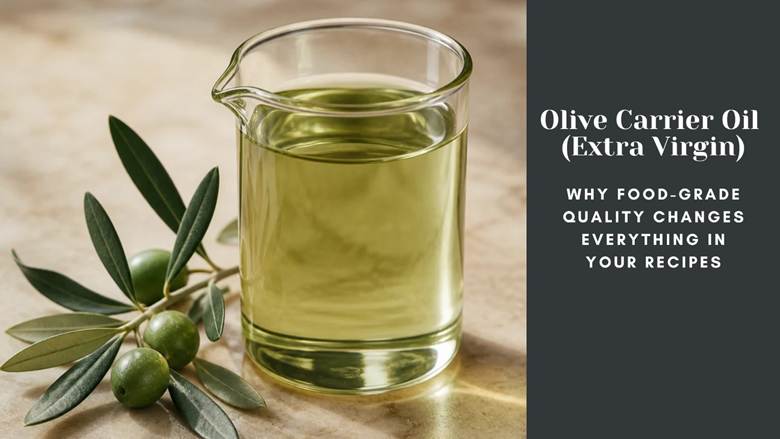
Extra Virgin Olive Carrier Oil (EVOO) is the highest grade of olive oil produced by the cold mechanical pressing of freshly harvested olives (Olea europaea) without the use of heat or chemical solvents. Its INCI name is Olea Europaea (Olive) Fruit Oil, and it is held to the strictest quality standard in the olive oil grading system a free fatty acid content of no more than 0.8 grams per 100 grams (expressed as oleic acid), a peroxide value of no more than 20 meq O2/kg, and zero flavor or aroma defects as determined by trained sensory panel evaluation. These standards are defined internationally by the International Olive Council (IOC) and enforced in Canada, the United States, and the European Union.
Extra virgin olive oil is distinguished from lower grades not merely by its lower acidity, but by the full preservation of its bioactive polyphenol and antioxidant compounds hydroxytyrosol, oleuropein, oleocanthal, squalene, tocopherols, and beta-carotene that are damaged or destroyed by the heat, solvents, or refining used to produce lower olive oil grades. These compounds are responsible for EVOO’s characteristic green-gold color, its complex fruity, grassy, and peppery flavor profile, and its extensively researched health benefits including cardiovascular protection, anti-inflammatory activity, and neuroprotective properties. For food manufacturers, chefs, personal care formulators, and pharmaceutical producers, food-grade quality EVOO is not a premium indulgence it is an ingredient with a fundamentally different functional and bioactive profile from refined olive oil grades.
Why Food-Grade Quality Changes Everything
The phrase “food-grade quality” in olive oil carries more weight than in many other ingredient categories. Unlike food-grade versus technical-grade distinctions that primarily concern purity and contaminant removal, the difference between extra virgin and lower olive oil grades represents a fundamental difference in the ingredient’s chemical composition, bioactive content, and functional performance.
- Polyphenol content: Extra virgin olive oil contains 200 to 800 mg/kg of polyphenols. Refined olive oil contains fewer than 10 mg/kg. This is not a minor difference it represents the complete loss of the compounds that provide most of EVOO’s documented health benefits and functional flavor.
- Flavor integrity: EVOO has a complex, characteristic sensory profile of fruitiness, bitterness, and peppery heat that defines Mediterranean culinary tradition. Refined olive oil is bland and neutral. In recipes where olive oil is a featured flavor, the grade defines the entire sensory experience.
- Smoke point consideration: EVOO has a smoke point of approximately 190 to 210 degrees C. While lower than refined oils, this is suitable for most culinary applications including sauteing, roasting, and baking. The notion that EVOO cannot be used for cooking is a persistent myth unsupported by the evidence.
- Antioxidant stability: Despite being less refined, EVOO’s natural polyphenols and tocopherols provide oxidative protection that makes it more stable in many cooking applications than its lower acidity number alone would suggest.
Key Features & Benefits
- Highest grade of olive oil cold-pressed without heat or solvents, meeting the IOC standard of free fatty acid content no more than 0.8 g per 100 g and zero sensory defects.
- Rich in oleic acid (omega-9, approximately 55 to 85%) providing exceptional skin compatibility, deep moisturization, and support for the skin lipid barrier in personal care applications.
- Naturally high in polyphenols (200 to 800 mg/kg) including hydroxytyrosol, oleuropein, and oleocanthal compounds with extensively documented antioxidant, anti-inflammatory, and cardiovascular protective properties.
- Contains Vitamin E (tocopherols), squalene, beta-carotene, and phytosterols providing antioxidant, skin-protective, and health-supporting benefits across food and personal care applications.
- Complex, characteristic flavor profile fruity, grassy, and peppery making it an active flavor contributor in culinary applications rather than simply a neutral cooking fat.
- Accepted in COSMOS and ECOCERT certified natural formulations; available in organic-certified grades for certified organic product manufacturing.
- Versatile across food, carrier oil, personal care, pharmaceutical, and pet care applications with a single food-grade material meeting the quality requirements of all these industries.
Applications
Extra Virgin Olive Carrier Oil is used across six industry categories served by EZ Elements, with food and beverage manufacturing and culinary use as its primary application.
- Salad dressings, vinaigrettes, marinades, and cold sauce applications where EVOO’s polyphenol content, flavor complexity, and health positioning are primary differentiating features
- Mediterranean cuisine, gourmet cooking, and restaurant-quality food preparation where authentic EVOO flavor defines the culinary character of the dish
- Dipping oils, finishing oils, and drizzle applications for bread, pasta, charcuterie, and prepared dishes where EVOO is the featured flavor rather than a neutral background fat
- Pesto, tapenade, hummus, and traditional Mediterranean condiment manufacturing where extra virgin quality is a brand and quality positioning requirement
- Premium baked goods including artisan breads, focaccia, olive oil cakes, and Mediterranean pastries where EVOO contributes both flavor and improved moisture retention
- Functional food and health food product formulations where EVOO’s polyphenol and oleic acid content support cardiovascular health, Mediterranean diet, and clean-label product claims
- Cold-pressed and raw food product manufacturing where the ingredient’s unprocessed, natural character and bioactive preservation are formulation priorities
- Cooking, sauteing, roasting, and baking applications across a broad range of Mediterranean and global cuisines where olive flavor is desired in the finished dish
- Carrier oil base for diluting essential oils in aromatherapy, therapeutic massage, and wellness blends where its natural polyphenol content provides antioxidant support to the formulation
- Traditional base oil for infused herbal oils olive oil has been used for centuries as the carrier for herb-infused oil preparations in Mediterranean traditional medicine and cosmetic traditions
- Base oil in premium massage formulations where its rich, viscous texture provides excellent skin glide and deep moisturization during therapeutic bodywork
- Vehicle for fat-soluble botanical actives, vitamins, and plant extracts in topical oil-phase preparations
- Traditional and premium facial moisturizers, anti-aging preparations, and skin care formulations leveraging its high oleic acid content and natural polyphenol bioactive.
- Hair care formulations including hair masks, scalp treatments, and pre-wash conditioning treatments where its deep penetrating emollient properties nourish dry, damaged, or chemically treated hair
- Soap making olive oil is the foundational oil in traditional Castile soap and Mediterranean soap-making traditions, producing a conditioning, mild, and long-lasting bar
- Lip balm, skin salve, and body butter formulations where its emollient richness and natural antioxidant content contribute to skin protection and repair
- Baby skin care and sensitive skin formulations where its high skin compatibility and natural composition are preferred over synthetic alternatives
- Pharmaceutical excipient in topical creams, ointments, and dermatological preparations — olive oil is listed in both the European Pharmacopoeia and British Pharmacopoeia as a pharmaceutical excipient
- Oral pharmaceutical preparations where olive oil serves as a vehicle for fat-soluble active pharmaceutical ingredients and nutritional supplements
- Traditional ear drops formulations where olive oil is recommended as a gentle, safe cerumen (earwax) softener for ear irrigation preparation
- Clinical nutrition and medical food applications where olive oil’s documented cardiovascular and anti-inflammatory properties are leveraged in therapeutic diet programs
- Nutraceutical soft gel capsule fill oil for omega-9 and polyphenol supplement formulations targeting cardiovascular and cognitive health outcomes
- Dietary supplement for dogs a small amount of extra virgin olive oil added to dog food supports coat health, skin condition, and provides monounsaturated fat for energy
- Topical skin and coat conditioning preparation for dogs where its emollient and antioxidant properties support dry or irritated skin recovery
- Pet grooming finishing oil for long-coat breeds where its natural conditioning and shine-enhancing properties improve coat appearance and manageability
- Veterinary-adjacent nutritional support products where EVOO’s documented anti-inflammatory properties are of interest in pet joint health formulations
- Traditional soap manufacturing feedstock olive oil-based soaps (Castile soap, Marseille soap) represent one of the oldest and most established industrial soap traditions
- Biodiesel and biofuel research applications as a renewable, plant-derived triglyceride feedstock
- Specialty lubricant and metalworking applications where a food-safe, natural oil is required for light-duty lubrication of food contact surfaces and equipment
Technical Specifications
| Property | Specification |
| INCI Name | Olea Europaea (Olive) Fruit Oil |
| CAS No. | 8001-25-0 |
| Common Name | Extra Virgin Olive Oil (EVOO), Olive Carrier Oil Extra Virgin |
| Grade | Extra Virgin — highest grade per IOC international olive oil standards |
| Free Fatty Acid (FFA) | Maximum 0.8 g per 100 g (expressed as oleic acid) — defining extra virgin specification |
| Peroxide Value | Maximum 20 meq O2/kg |
| Appearance | Clear to slightly hazy golden-green to golden-yellow liquid |
| Odour and Flavour | Characteristic fruity, grassy, and peppery; characteristic of fresh olive fruit |
| Fatty Acid Profile | Oleic acid (omega-9): 55 to 85%; Linoleic acid (omega-6): 3.5 to 21%; Palmitic acid: 7.5 to 20% |
| Polyphenol Content | 200 to 800 mg/kg (compared to less than 10 mg/kg in refined olive oil) |
| Vitamin E Content | Tocopherols present; natural antioxidant |
| Smoke Point | Approximately 190 to 210 degrees C (suitable for most culinary applications) |
| Saponification Value | 184 to 196 mg KOH/g |
| Iodine Value | 75 to 94 g I2/100g |
| Origin | Cold-pressed from freshly harvested Olea europaea fruit without heat or solvents |
| Certifications | Available in organic-certified (COSMOS/ECOCERT), conventional, and EU-standard grades |
Why Choose EZ Elements as Your Supplier
EZ Elements supplies food-grade Extra Virgin Olive Carrier Oil with verified free fatty acid content, consistent quality specifications, and complete documentation to support food manufacturers, personal care brands, pharmaceutical formulators, and aromatherapy producers across Canada and North America.
We supply food manufacturers, culinary businesses, personal care brands, aromatherapy formulators, pharmaceutical companies, and soap makers, providing:
- Full documentation including Technical Data Sheet (TDS), Certificate of Analysis (COA), and Safety Data Sheet (SDS)
- Extra virgin grade with verified free fatty acid content maximum 0.8 g per 100 g meeting IOC international standard
- Bulk supply with transparent, competitive pricing per kilogram across all available pack sizes
- Technical support on culinary applications, formulation use levels, oxidative stability, and storage recommendations
Safety & Storage Guidelines
- Store in a cool, dark location between 10 and 18 degrees C away from direct sunlight, heat, and air exposure to preserve polyphenols and minimize oxidation.
- Use dark glass, stainless steel, or food-grade HDPE containers to protect from light degradation light is the primary enemy of EVOO polyphenol stability.
- Keep containers tightly sealed after use to limit air exposure and oxidation.
- EVOO will cloud and partially solidify at temperatures below approximately 10 degrees C this is a natural physical property and does not affect quality; simply warm gently to return to clear liquid form.
- Shelf life is typically 18 to 24 months from harvest date; consume within 12 to 18 months of opening for optimal flavor and polyphenol content.
Refer to the Certificate of Analysis (COA) and Technical Data Sheet (TDS) provided by EZ Elements for batch-specific quality information.
Frequently Asked Questions
Q1: Which industries use Extra Virgin Olive Carrier Oil?
Extra Virgin Olive Carrier Oil is used across six industries: Food and Beverages (primary salad dressings, Mediterranean cooking, gourmet food manufacturing, functional health food, and baking), Carrier Oil (aromatherapy blends, herbal infused oils, and therapeutic massage), Personal Care (skin care, hair care, traditional Castile soap, and baby care formulations), Pharmaceutical (topical excipient, oral vehicle, ear drops, and clinical nutrition), Pet Care (dietary supplement for coat and skin health, topical conditioning, and grooming), and Industrial (traditional soap manufacturing and biodiesel research).
Q2: What is the difference between extra virgin olive oil and regular olive oil in food manufacturing?
The difference is substantial and directly impacts product quality, labeling claims, and consumer value proposition. Extra virgin olive oil is cold-pressed from fresh olives without heat or chemicals, preserving its full polyphenol content (200 to 800 mg/kg), natural flavor complexity, and bioactive compounds. Regular or refined olive oil has been processed using heat and chemical refining to correct acidity or flavor defects, which reduces polyphenol content to below 10 mg/kg and eliminates the characteristic olive flavor. For food products where olive oil is a featured ingredient, highlighted on packaging, or used in a Mediterranean health positioning, extra virgin quality is required to deliver on the product promise. Refined olive oil is appropriate for neutral fat applications where olive flavor is not desired.
Q3: Can EVOO be used for cooking and baking, or is it only for cold applications?
Yes, EVOO can be used for cooking and baking, and the common claim that it cannot be used for high-heat cooking is not supported by evidence. EVOO has a smoke point of approximately 190 to 210 degrees C, which is suitable for sauteing, stir-frying, roasting, and baking. Research has shown that EVOO is actually one of the most stable cooking oils under heat due to its natural antioxidants, and it produces significantly fewer harmful oxidation products than many refined vegetable oils when heated to typical cooking temperatures. The polyphenols do degrade somewhat with prolonged high heat, but the oil remains safe and functional for all standard culinary applications.
Q4: How does EVOO perform as a carrier oil for aromatherapy and topical formulations?
EVOO is a traditional and historically significant carrier oil for aromatherapy, herbal infusions, and topical preparations. Its high oleic acid content (55 to 85%) provides deep skin penetration and excellent moisturization. Its natural polyphenols and tocopherols add antioxidant value to formulations. However, EVOO has a heavier, more viscous texture and a characteristic olive scent that may not be suitable for all personal care formulations, particularly those targeting a light or unscented product. For formulations where scent neutrality and lighter texture are priorities, lighter carrier oils such as MCT oil, sweet almond, or camellia seed oil may be preferred. Many formulators blend EVOO at 10 to 25% with lighter oils to access its bioactive while managing sensory profile.
Q5: Is Extra Virgin Olive Oil suitable for certified organic and natural personal care formulations?
Yes. Extra Virgin Olive Oil is accepted as a natural ingredient under COSMOS and ECOCERT certification standards and is widely used in certified organic personal care formulations. Organic-certified grades with EU organic or USDA organic certification are available for formulators developing certified organic products. It’s cold-pressed, unrefined, plant-derived origin makes it one of the most authentically natural carrier oils available for natural and organic personal care product manufacturing.
Q6: Where can I buy Extra Virgin Olive Carrier Oil in bulk in Canada?
Extra Virgin Olive Carrier Oil is available for bulk purchase directly from EZ Elements, with supply options for food manufacturers, personal care brands, aromatherapy formulators, pharmaceutical companies, and soap makers across Canada and North America. Contact our team for current pricing, documentation, and product samples.
Related Ingredients
The following EZ Elements ingredients complement Extra Virgin Olive Carrier Oil across culinary, personal care, and carrier oil formulations:
- Avocado Carrier Oil Rich, nutrient-dense companion carrier oil that blends beautifully with olive oil in intensive skin care and hair treatment formulations; adds depth and vitamin richness alongside olive oil emollient properties.
- MCT Carrier Oil Lightweight, neutral-flavored carrier oil used alongside EVOO in functional food blends, tinctures, and personal care formulations where the full EVOO flavor profile is too dominant for the application.
- Camellia Seed Carrier Oil Premium silky carrier oil that complements EVOO in facial and hair care formulations, providing a lighter, faster-absorbing oil alongside EVOO’s richer emollient and antioxidant contribution.
Order or Enquire
Looking to buy Extra Virgin Olive Carrier Oil in bulk? Contact EZ Elements for current pricing, full product documentation, and supply options across food and beverage, personal care, pharmaceutical, aromatherapy, and pet care applications. We supply brands, manufacturers, and formulators across Canada and North America. Reach out today to request a sample, Technical Data Sheet, or a bulk pricing quote.