Product Overview
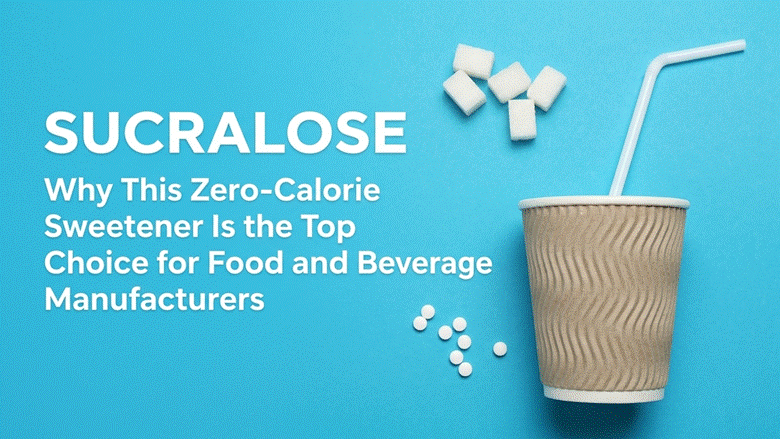
Sucralose is a high-intensity, non-nutritive sweetener produced through the selective chlorination of sucrose, the same sugar molecule found in table sugar. This process replaces three hydroxyl groups on the sucrose molecule with chlorine atoms, fundamentally changing how the body recognizes and processes the resulting compound. Its chemical formula is C12H19Cl3O8, its internationally recognized food additive code is E955, and its CAS number is 56038-13-2. EZ Elements supplies food-grade Sucralose as a white, free-flowing crystalline powder with a clean, sugar-like sweetness and no lingering aftertaste.
Sucralose stands apart from other high-intensity sweeteners for one defining reason: the body does not recognize it as a carbohydrate and largely does not metabolize it for energy, which means it passes through the digestive system essentially unchanged, contributing virtually zero calories despite delivering sweetness roughly 600 times more intense than sucrose. Combined with exceptional stability across a wide range of heat, pH, and storage conditions, this is precisely why Sucralose has become the default, top-choice sweetener for food and beverage manufacturers developing sugar-free, reduced-sugar, and diabetic-friendly products at commercial scale.
Why Sucralose Is the Top Choice for Manufacturers
Walk down the sugar-free aisle of almost any grocery store and Sucralose is very likely the sweetener doing the work behind the label. There is a specific, technical reason for this dominance, and it comes down to a combination of properties that few competing sweeteners can match all at once.
- Unmatched heat stability: unlike aspartame, which breaks down and loses sweetness when exposed to baking or hot-fill processing temperatures, Sucralose remains stable through baking, pasteurization, and hot-fill beverage production, making it usable across virtually the entire food manufacturing process rather than being limited to cold or no-heat applications.
- Broad pH stability: Sucralose performs reliably across the acidic conditions found in carbonated soft drinks and fruit-based products as well as the more neutral pH of dairy, meaning manufacturers do not need to reformulate their sweetening strategy across different product categories.
- Clean, sugar-like taste profile: Sucralose is widely regarded by flavour scientists as having one of the cleanest sweetness profiles among high-intensity sweeteners, with minimal bitter or metallic aftertaste compared to some alternatives, an important factor in consumer acceptance and repeat purchase.
- Extreme potency translates to formulation efficiency: at approximately 600 times the sweetness of sugar, only a very small amount of Sucralose is needed to replace a much larger volume of sugar, simplifying recipe reformulation and reducing the footprint needed in the final formula.
- Long shelf life and storage stability: Sucralose does not degrade meaningfully over typical food product shelf life, supporting consistent sweetness from the first unit produced to the last one sold.
- Established, global regulatory acceptance: with GRAS status from the FDA, E955 approval in the EU, and approvals from EFSA and Health Canada, Sucralose carries one of the most thoroughly reviewed safety and compliance records of any sweetener, reducing regulatory risk for manufacturers selling across multiple markets.
Key Features & Benefits
- Approximately 600 times sweeter than sucrose, allowing very small use levels to replace much larger quantities of sugar in a formulation.
- Essentially zero calories, as the body does not metabolize Sucralose for energy, supporting reduced-calorie and diabetic-friendly product claims.
- Exceptional heat stability, remaining sweet and stable through baking, pasteurization, and hot-fill beverage processing without breakdown.
- Stable across a broad pH range, performing reliably in both acidic beverages and neutral-pH dairy and bakery applications.
- Clean, sugar-like taste with minimal aftertaste, supporting strong consumer acceptance in finished products.
- GRAS classified by the FDA, approved as E955 internationally, and accepted by EFSA and Health Canada, with one of the most extensively reviewed safety profiles among sweeteners.
- Long shelf-life stability, with no significant degradation in sweetness over typical food and beverage product storage periods.
Applications
Sucralose is used across six industry categories served by EZ Elements, with food and beverage manufacturing accounting for the overwhelming majority of global demand, estimated at more than 80% of total Sucralose usage worldwide.
- Diet sodas, sugar-free carbonated beverages, sports drinks, and flavored waters, where heat and acid stability allow consistent sweetness through hot-fill and carbonation processes
- Powdered drink mixes and instant beverage formulations, where Sucralose maintains sweetness through long shelf life and varied reconstitution conditions
- Baked goods, including bread, cakes, and cookies, where its stability through high oven temperatures sets it apart from many competing high-intensity sweeteners
- Dairy products, including yogurt, flavored milk, and ice cream, where it sweetens without adding carbohydrates, supporting reduced-sugar and diabetic-friendly product positioning
- Sugar-free candy, chewing gum, jellies, and jams, where it delivers long-lasting sweetness without the calories of traditional sugar
- Canned fruits, condiments, and processed sauces, where stability under heat processing and extended storage supports shelf-stable product formats
- Tabletop sweetener products, where Sucralose is typically blended with bulking agents such as maltodextrin or dextrose so consumers can measure it cup-for-cup like sugar
- Liquid medicines, cough syrups, chewable tablets, and lozenges, where its intense sweetness masks the bitterness of active pharmaceutical ingredients and improves patient compliance
- Vitamin and nutritional supplement formulations, where it provides a calorie-free sweetening option in both food-format and pharmaceutical-format supplements
- Pharmaceutical-grade Sucralose, produced to a higher purity standard than standard food-grade material, is used specifically in medicinal formulations requiring stricter quality control
- Toothpaste and mouthwash, where it functions as a sweetener that does not contribute to tooth decay, unlike traditional sugar
- Lipstick, lip gloss, and other lip care cosmetics, where it is used to add a pleasant sweet taste to the user experience
- Skin care and personal wash products, where small amounts can be used to improve overall sensory attributes
- Sugar-free pet treats and supplement formulations, where calorie-conscious pet nutrition products benefit from the same zero-calorie sweetening function used in human food
- Chemical industry applications, where Sucralose is used in the production of various low-sugar and sugar-free food additive systems as a substitute for higher-calorie sweeteners
Technical Specifications
| Property | Specification |
| Chemical Name | Sucralose (Trichlorogalactosucrose) |
| CAS No. | 56038-13-2 |
| Chemical Formula | C12H19Cl3O8 |
| Food Additive Code | E955 |
| Appearance | White, free-flowing crystalline powder |
| Taste | Clean, sugar-like sweetness with minimal aftertaste |
| Relative Sweetness | Approximately 600 times sweeter than sucrose |
| Caloric Value | Essentially zero calories; not metabolized for energy by the body |
| Heat Stability | Stable through baking, pasteurization, and hot-fill processing temperatures |
| pH Stability | Stable across a broad pH range, including acidic beverage and neutral dairy applications |
| Solubility | Readily soluble in water, ethanol, and methanol |
| Origin | Produced via selective chlorination of sucrose |
| Available Grades | Food grade and pharmaceutical grade (higher purity for medicinal use) |
| Regulatory Status | GRAS (FDA); E955 (EU); approved by EFSA and Health Canada |
Why Choose EZ Elements as Your Supplier
EZ Elements supplies food-grade Sucralose with verified purity, consistent sweetness intensity, and complete documentation to support food and beverage manufacturers, pharmaceutical formulators, and personal care brands across Canada.
- Full documentation including Technical Data Sheet (TDS), Certificate of Analysis (COA), and Safety Data Sheet (SDS)
- Food-grade specification meeting FDA GRAS, E955, EFSA, and Health Canada requirements
- Bulk supply with transparent, competitive pricing per kilogram across all available pack sizes
- Technical support on dosing ratios, sweetness blending with bulking agents, and formulation guidance across heat-processed and cold-fill applications
Safety & Storage Guidelines
- Store in a cool, dry, well-ventilated area away from direct sunlight, moisture, and heat sources.
- Keep containers tightly sealed after use to prevent moisture absorption and maintain consistent sweetness intensity.
- Due to its extreme sweetness intensity, ensure precise weighing and even dispersion when incorporating into formulations, as small dosing errors can have a noticeable impact on final product sweetness.
- Sucralose is GRAS classified and has been extensively reviewed by global regulatory bodies; use within recommended formulation guidelines for the intended food or beverage category.
- Shelf life is typically 2 to 3 years from manufacture date when stored correctly in sealed, cool, and dry conditions.
Complete handling, first aid, and disposal instructions are provided in the Safety Data Sheet (SDS) available from EZ Elements upon request.
Frequently Asked Questions
Q1: Why is Sucralose considered the top choice sweetener for food and beverage manufacturers?
Sucralose combines several properties that few competing sweeteners offer together: exceptional heat stability through baking and hot-fill processing, broad pH stability across both acidic beverages and neutral dairy products, a clean sugar-like taste with minimal aftertaste, extreme sweetness intensity that simplifies formulation, long shelf-life stability, and one of the most thoroughly reviewed global regulatory safety records of any sweetener. Competing sweeteners such as aspartame lose sweetness and stability under heat, which limits their use in baked goods and hot-fill beverages. This combination of functional performance and regulatory confidence is why Sucralose accounts for the majority of global demand in the food-grade sweetener category.
Q2: How does Sucralose compare to sugar in terms of calories and sweetness?
Sucralose is approximately 600 times sweeter than sucrose by weight, meaning only a very small amount is needed to achieve the same sweetness as a much larger quantity of sugar. Because the body does not recognize the modified Sucralose molecule as a carbohydrate, it is not metabolized for energy and passes through the digestive system largely unchanged, contributing essentially zero calories. This combination, intense sweetness at a tiny use level plus negligible caloric contribution, is what makes it so effective for sugar reduction and reformulation without the manufacturer needing to compensate for a major loss of bulk or sweetness.
Q3: Why does Sucralose work in baked goods when many other sweeteners do not?
Many high-intensity sweeteners, aspartame in particular, are not stable under high heat and will break down or lose sweetness when exposed to typical baking or cooking temperatures, making them unsuitable for products that require an oven step. Sucralose is chemically much more stable under heat, retaining its sweetness through baking, pasteurization, and hot-fill beverage production. This heat stability is one of the primary reasons Sucralose became the preferred sweetener for sugar-free and reduced-sugar baked goods, where the sweetener must survive the entire baking process intact.
Q4: Is Sucralose used in anything besides food and drinks?
Yes. Beyond food and beverages, Sucralose is widely used in pharmaceutical formulations, particularly in liquid medicines, cough syrups, chewable tablets, and lozenges, where its intense sweetness helps mask the bitter taste of active pharmaceutical ingredients and improves patient compliance, especially in products formulated for children. It also appears in personal care products including toothpaste, mouthwash, and lip cosmetics, where it improves taste and overall sensory experience, and in sugar-free pet treats and supplement formulations for calorie-conscious pet nutrition.
Q5: What is the difference between food-grade and pharmaceutical-grade Sucralose?
Food-grade Sucralose is manufactured to meet the purity standards required for use in beverages, dairy, confectionery, and general food manufacturing, and is the grade most commonly supplied for food and beverage applications. Pharmaceutical-grade Sucralose is produced to a higher purity standard, with stricter quality control suited to medicinal formulations where tighter impurity limits and additional testing documentation are required. Food manufacturers should specify food-grade material for standard food and beverage production, while pharmaceutical formulators should request pharmaceutical-grade material with appropriate compliance documentation.
Q6: Where can I buy food-grade Sucralose in bulk in Canada?
Food-grade Sucralose is available for bulk purchase directly from EZ Elements, with supply options for food and beverage manufacturers, pharmaceutical formulators, and personal care brands across Canada. Contact our team for current pricing, documentation, and product samples.
Related Ingredients
The following EZ Elements ingredients are commonly used alongside Sucralose in sugar-free and reduced-sugar food and beverage formulations:
- Erythritol (18-60 Mesh) A zero-calorie bulk sweetener frequently blended with Sucralose to provide the bulk and mouthfeel of sugar that high-intensity sweeteners alone cannot deliver, since Sucralose is used at very small concentrations.
- Sorbitol 70% Kosher A humectant and bulk sweetener used alongside Sucralose in sugar-free baked goods and confectionery, where Sorbitol contributes moisture retention and texture while Sucralose supplies the bulk of the sweetness.
- Citric Acid (Anhydrous) USP/Kosher A common acidulant paired with Sucralose in sugar-free beverages and confectionery to balance sweetness with tartness and round out the overall flavor profile.
Order or Enquire
Looking to buy food-grade Sucralose in bulk? Contact EZ Elements for current pricing, full product documentation, and supply options across food and beverage, pharmaceutical, and personal care applications. We supply brands, manufacturers, and formulators across Canada. Reach out today to request a sample, Technical Data Sheet, or a bulk pricing quote for your next project.