Product Overview
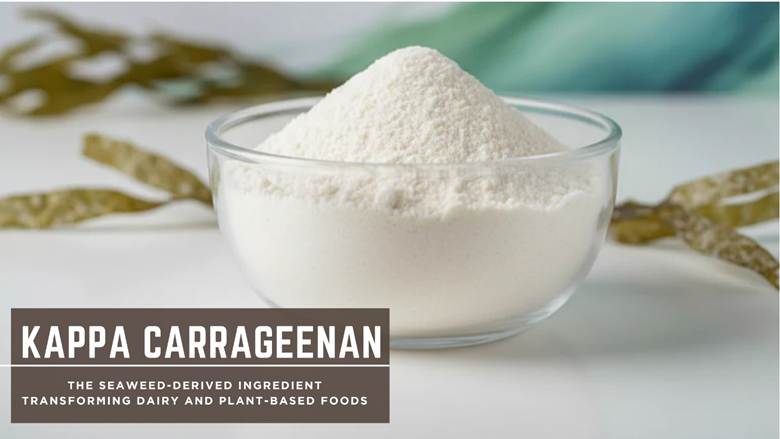
Kappa Carrageenan is a naturally occurring sulfated polysaccharide extracted from specific species of red seaweed, primarily Kappaphycus alvarezii (also known as Eucheuma cottonii), which is sustainably cultivated in tropical marine environments across Southeast Asia, East Africa, and the Pacific Islands. Its INCI name is Carrageenan, its food additive code is E407, and its CAS number is 11114-20-8. Carrageenan is a collective term for a family of related polysaccharides, of which kappa, iota, and lambda are the three principal commercial types. Kappa Carrageenan is defined by its ability to form strong, firm, brittle gels in the presence of potassium ions a property that distinguishes it from the softer, elastic gels of iota carrageenan and the non-gelling, thickening behavior of lambda carrageenan.
Kappa Carrageenan interacts strongly and specifically with proteins particularly dairy proteins such as casein and kappa-casein which is the basis of its exceptional performance in dairy and plant-based dairy-alternative formulations. At very low use concentrations (typically 0.01% to 0.05%), it forms a weak gel network with milk proteins that prevents cocoa from settling in chocolate milk, cream from separating in UHT-processed dairy beverages, and proteins from aggregating during high-temperature processing. At higher concentrations (0.3% to 1.5%), it produces firm, set gels used in desserts, processed cheese, and restructured meat products. This dual function across very different concentration ranges gives food technologists remarkable formulation flexibility with a single natural ingredient.
Key Features & Benefits
- Extracted from sustainably farmed red seaweed a renewable, ocean-derived, plant-based natural hydrocolloid with strong clean-label credentials.
- Forms strong, firm, brittle gels in the presence of potassium ions ideal for set desserts, processed cheese, structured meat alternatives, and gelled confections.
- Exceptional protein reactivity interacts specifically with dairy proteins at concentrations as low as 0.01%, providing stabilization in fluid dairy products without visible gel formation.
- Thermoreversible gelling melts when heated above approximately 60 to 70 degrees C and re-sets on cooling, enabling repeated processing cycles without permanent structure loss.
- Synergistic with locust bean gum the kappa carrageenan and locust bean gum combination produces significantly stronger, more elastic, and less brittle gels than either alone.
- GRAS classified by the FDA and approved as E407 internationally accepted across food, pharmaceutical, and personal care regulatory frameworks globally.
- Natural, vegan, and biodegradable suitable for certified plant-based, vegan, and natural food and personal care product positioning.
Applications
Kappa Carrageenan is used across five industry categories served by EZ Elements, wherever natural gelling, stabilizing, and protein interaction properties are required.
- Chocolate milk and cocoa beverages at concentrations as low as 0.01 to 0.025%, kappa carrageenan forms a weak gel network with milk proteins that suspends cocoa particles and prevents settling throughout the product shelf life
- Plant-based dairy alternatives including oat milk, almond milk, soy milk, and pea protein beverages where it provides stable suspension, improved mouthfeel, and prevention of protein aggregation
- Plant-based cheese, vegan cream cheese, and dairy-free cheese alternatives where kappa carrageenan provides the meltable, sliceable gel structure that replaces the protein network of conventional dairy
- Ice cream and frozen desserts as a freeze-thaw stabilizer and ice crystal inhibitor, improving texture, reducing icing, and preventing melt-down during the serving window
- Dairy desserts including panna cotta, blancmange, chocolate mousse, and set puddings where firm, clean-slicing gel texture is the target
- Processed meat and meat alternatives used as a water-binding and gelling agent in restructured meat products, deli slices, and plant-based meat alternatives providing juiciness and slice ability
- Infant formula and nutritional beverages where protein sedimentation and fat separation during the extended shelf life of UHT-processed products
- Molecular gastronomy and culinary applications including hot gels, fluid gels, and thermoreversible gelled spheres where its unique thermal behavior is used creatively
- Skin lotions, creams, and moisturizing gels as a natural thickener and film-forming agent providing smooth texture, improved spread ability, and a pleasant skin feel
- Toothpaste and oral care gel formulations as a natural binder and thickener maintaining product homogeneity, preventing syneresis, and contributing to the gel-like tube-dispensing consistency
- Shampoos and hair care products as a natural viscosity builder and conditioning agent improving product feel and hair manageability
- Natural facial masks and gel-format sheet mask serum formulations where its gelling properties provide structure and sustained contact with the skin
- COSMOS and ECOCERT certified natural personal care formulations where it serves as a biodegradable, seaweed-derived alternative to synthetic polymer thickeners
- Tablet binder and disintegrant in solid oral pharmaceutical dosage forms carrageenan facilitates granule cohesion during tablet compression and controlled disintegration upon ingestion
- Controlled drug release matrix system kappa carrageenan forms a gel barrier in the gastrointestinal tract that modulates the rate of active pharmaceutical ingredient release
- Oral pharmaceutical suspension stabilizer preventing sedimentation of insoluble active ingredients in liquid medicines across the product shelf life
- Pharmaceutical research tool degraded carrageenan (not food-grade) is used in preclinical inflammatory research models; food-grade carrageenan is distinct and does not share these properties
- Encapsulation and microencapsulation of pharmaceutical actives, probiotics, and sensitive ingredients in gel bead and capsule formats
- Wet pet food and canned pet food formulations as a natural gelling and stabilizing agent providing structure in jelly and gravy-format products for dogs and cats
- Pet food gravy and sauce stabilizer maintaining smooth, pourable consistency and preventing ingredient separation after opening
- Semi-moist pet treat formulations where carrageenan contributes water binding, soft texture, and moisture retention throughout the product shelf life
- Pet food texture improvement agent in premium and veterinary diet pet food formulations targeting specific texture requirements for palatability or dental health
- Air freshener gel formulations as the primary gelling agent creating the transparent, firm gel matrix that slowly releases fragrance throughout the product life
- Textile printing and fabric finishing as a thickener for print paste formulations in textile dyeing operations
- Biotechnology and laboratory applications as a gel matrix for cell culture, microbiology growth media, and encapsulation of live cells and microorganisms
- Biodegradable packaging film research as a marine-derived polysaccharide with potential for edible and compostable food packaging applications
Technical Specifications
| Property | Specification |
| INCI Name | Carrageenan |
| CAS No. | 11114-20-8 |
| Food Additive Code | E407 |
| Type | Kappa Carrageenan (strong brittle gel type) |
| Source | Red seaweed — primarily Kappaphycus alvarezii (Eucheuma cottonii) |
| Appearance | Off-white to cream-colored free-flowing powder |
| Odour | Bland, characteristic seaweed; practically odourless |
| Moisture Content | Maximum 12% (food grade) |
| Gel Type | Strong, firm, brittle gel in the presence of potassium ions |
| Gel Strength (1.5% KCl) | Typically, 500 to 2000 g/cm2 depending on grade and concentration |
| Gelling Temperature | Approximately 40 to 60 degrees C (varies with cation concentration) |
| Melting Temperature | Approximately 60 to 70 degrees C (thermoreversible) |
| Solubility | Disperses in cold water; dissolves fully above 70 degrees C; hot process recommended |
| pH Stability | Stable at pH 4.0 and above; degradation occurs below pH 3.5 in hot conditions |
| Origin | Sustainably farmed Kappaphycus alvarezii — Southeast Asia, East Africa, Pacific Islands |
| Recommended Use Level | 0.01% to 0.05% for dairy suspension; 0.3% to 1.5% for gelled food applications |
| Regulatory Status | GRAS (FDA); E407 (EU); accepted in USP and major international pharmacopeias |
Why Choose EZ Elements as Your Supplier
EZ Elements supplies food-grade Kappa Carrageenan with consistent gel strength, verified purity, and complete documentation to support food manufacturers, personal care brands, pharmaceutical formulators, and pet care producers across Canada and North America.
We supply dairy manufacturers, plant-based food producers, confectionery companies, personal care formulators, and pharmaceutical companies, providing:
- Full documentation including Technical Data Sheet (TDS), Certificate of Analysis (COA), and Safety Data Sheet (SDS)
- Food-grade Kappa Carrageenan with verified gel strength specifications and consistent batch quality
- Bulk supply with transparent, competitive pricing per kilogram across all available pack sizes
- Technical support on use levels, hydration methods, pH compatibility, synergistic combinations with locust bean gum, and dairy protein interaction guidance
Safety & Storage Guidelines
- Store in a cool, dry, well-ventilated area away from direct sunlight, heat, and humidity to prevent moisture absorption and premature hydration of the powder.
- Keep bags or containers tightly sealed after each use to maintain powder flowability and prevent microbial contamination.
- Kappa Carrageenan requires dissolution above 70 degrees C for full hydration; ensure complete dissolution before cooling to achieve consistent gel performance.
- Avoid processing below pH 3.5 in hot conditions as acid hydrolysis degrades carrageenan molecular weight and reduces gel strength.
- Shelf life is typically 24 months from manufacture date when stored correctly in sealed packaging under cool, dry conditions.
Complete handling, first aid, and disposal instructions are provided in the Safety Data Sheet (SDS) available from EZ Elements upon request.
Frequently Asked Questions
Q1: Which industries use Kappa Carrageenan?
Kappa Carrageenan is used across five industries: Food and Beverages (primary dairy stabilizer in chocolate milk, plant-based alternatives, ice cream, desserts, processed meats, and infant formula), Personal Care (natural thickener in lotions, toothpaste, shampoos, and facial gels), Pharmaceutical (tablet binder, controlled-release matrix, suspension stabilizer, and encapsulation agent), Pet Care (wet pet food gelling agent, gravy stabilizer, and semi-moist treat texture agent), and Industrial (air freshener gel base, textile printing paste, and biotechnology cell culture medium).
Q2: What makes Kappa Carrageenan different from Iota and Lambda Carrageenan?
The three commercial carrageenan types differ in their sulfation pattern and gelling behavior. Kappa Carrageenan forms strong, firm, brittle gels with potassium ions the type most commonly used in dairy products, desserts, and processed meats where a set, sliceable texture is needed. Iota Carrageenan forms softer, more elastic, freeze-thaw stable gels with calcium ions preferred in applications requiring a flexible gel that does not weep syneresis during freezing and thawing. Lambda Carrageenan does not form gels but provides excellent cold-process thickening and dairy protein stabilization used in dairy cream products and instant food mixes. Kappa is the most widely used carrageenan type in mainstream food manufacturing.
Q3: How does Kappa Carrageenan work in chocolate milk at such low concentrations?
At concentrations as low as 0.01% to 0.025% just one to two and a half parts per ten thousand kappa carrageenan interacts specifically with the kappa-casein fraction of milk proteins to form a very weak, invisible gel network throughout the milk. This network is far too weak to be perceived as a gel texture in the drinking experience, but it is strong enough to trap cocoa or chocolate particles within its structure and prevent them from settling to the bottom of the container during storage. This protein-polysaccharide interaction is unique to carrageenan and is not replicated by other food hydrocolloids at comparable concentrations, which explains why carrageenan has been the industry-standard chocolate milk stabilizer for decades.
Q4: Is Kappa Carrageenan suitable for vegan and plant-based food formulations?
Yes. Kappa Carrageenan is derived entirely from red seaweed it contains no animal-derived ingredients and is inherently vegan. It is widely used in plant-based dairy alternatives (oat milk, almond milk, soy milk), vegan cheese, and plant-based meat products specifically because of its ability to replicate textures and stabilities that animal-derived ingredients like gelatin or dairy proteins would otherwise provide. It is accepted under most vegan certification standards and is a key ingredient enabling the texture innovation that is driving the growth of the plant-based food sector.
Q5: What is the safety status of food-grade Carrageenan?
Food-grade Carrageenan (E407) has been evaluated by major regulatory bodies including the FDA, the European Food Safety Authority (EFSA), and the Joint FAO/WHO Expert Committee on Food Additives (JECFA), all of which have concluded that food-grade carrageenan is safe for human consumption at levels used in food manufacturing. It is important to distinguish food-grade carrageenan from degraded carrageenan (also called poligeenan), which has a significantly lower molecular weight due to acid hydrolysis and has been used in some animal inflammatory research models. Degraded carrageenan is not used in food products and should not be confused with the food-grade ingredient.
Q6: Where can I buy Kappa Carrageenan in bulk in Canada?
Kappa Carrageenan is available for bulk purchase directly from EZ Elements, with supply options for food manufacturers, plant-based food producers, personal care brands, pharmaceutical formulators, and pet food producers across Canada and North America. Contact our team for current pricing, documentation, and product samples.
Related Ingredients
The following EZ Elements ingredients are commonly used alongside Kappa Carrageenan in food and personal care formulations:
- Xanthan Gum (200 Mesh) Natural microbial polysaccharide that complements kappa carrageenan in food and personal care formulations, providing cold-process thickening, suspension, and freeze-thaw stability alongside carrageenan’s gelling function.
- Guar Gum (200 Mesh) High-viscosity natural galactomannan frequently combined with kappa carrageenan in food formulations; guar gum reduces the brittleness of kappa carrageenan gels and improves syneresis at lower total hydrocolloid concentrations.
- COLFLO 67 (Modified Waxy Maize Starch) Freeze-thaw stable modified starch used alongside kappa carrageenan in frozen dessert and dairy formulations where combined starch thickening and carrageenan protein stabilization provide comprehensive texture stability.
Order or Enquire
Looking to buy Kappa Carrageenan in bulk? Contact EZ Elements for current pricing, full product documentation, and supply options across food and beverage, personal care, pharmaceutical, pet care, and industrial applications. We supply brands, manufacturers, and formulators across Canada and North America. Reach out today to request a sample, Technical Data Sheet, or a bulk pricing quote for your next formulation project.