Product Overview
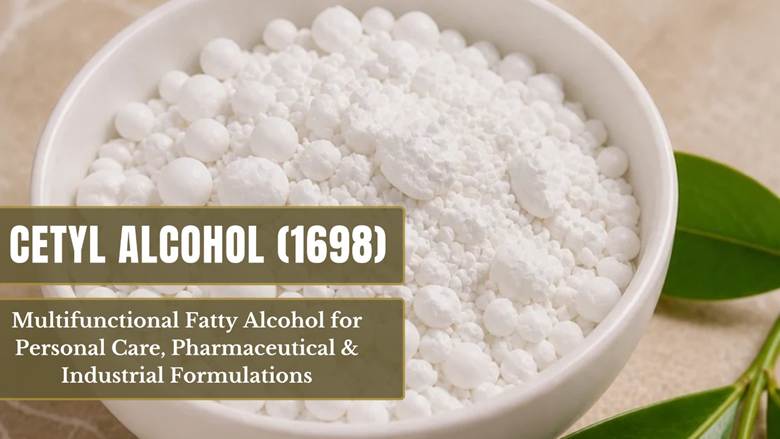
Cetyl Alcohol (1698) is a long-chain fatty alcohol with the molecular formula C16H34O, also known as 1-hexadecanol or palmityl alcohol. It is a white, waxy solid at room temperature, derived primarily through the hydrogenation or reduction of palmitic acid from vegetable sources including palm oil and coconut oil. The designation “1698” refers to its grade specification, identifying a high-purity cetyl alcohol widely used in personal care and pharmaceutical manufacturing. Its INCI name is Cetyl Alcohol, and its CAS number is 36653-82-4.
Despite its name, Cetyl Alcohol is not a drying or irritating alcohol — it is a fatty alcohol with properties fundamentally different from short-chain alcohols such as ethanol. It functions as an emulsifier, co-emulsifier, emollient, opacifier, thickener, and foam stabilizer across a broad range of formulations. It is one of the foundational ingredients in the cosmetic and pharmaceutical industry, providing structural stability to creams and lotions, conditioning benefits in hair care, and excipient functionality in topical pharmaceutical preparations. The FDA has approved cetyl alcohol as both a direct and indirect food additive, and it is widely used across personal care, pharmaceutical, cleaning, and industrial applications.
Key Features & Benefits
- Derived from palm oil or coconut oil through reduction of palmitic acid — a plant-based fatty alcohol from renewable sources.
- Functions simultaneously as an emulsifier, co-emulsifier, thickener, emollient, opacifier, and foam stabilizer across formulation types.
- Significantly improves the texture, feel, and stability of creams, lotions, conditioners, and ointments.
- Non-drying fatty alcohol — does not strip moisture from skin or hair; provides conditioning and occlusive protection.
- FDA-approved as a direct and indirect food additive; accepted across pharmaceutical, cosmetic, and food regulatory frameworks.
- Compatible with a wide range of oils, waxes, emulsifiers, and active ingredients across all formulation systems.
- Solid at room temperature (melting point 49–56°C), making it easy to handle, store, and incorporate into hot-process manufacturing.
Applications
Cetyl Alcohol (1698) is used across five industry categories served by EZ Elements, wherever emulsification, thickening, conditioning, or structural stability is required in formulation.
- Moisturizing creams, face creams, and body lotions as a primary emulsifier, co-emulsifier, and thickener
- Hair conditioners, leave-on treatments, and hair masks as a key conditioning and slip-enhancing agent
- Shampoos as an opacifier and foam stabilizer to improve product appearance and lather quality
- Anti-aging serums and emulsion-based skin treatments requiring stable, well-structured formulations
- Lip balms, lip creams, and occlusive skin protectants where waxy texture and emollient properties are needed
- Baby lotions and sensitive skin formulations where a mild, non-irritating thickener and emollient is required
- Sunscreen emulsions and SPF lotions requiring stable oil-in-water or water-in-oil emulsion structures
- Topical creams, ointments, and gels as an emulsifier and stabilizer ensuring even distribution of active pharmaceutical ingredients
- Medicated hair and scalp preparations requiring conditioning emulsion structures
- Pharmaceutical ointment bases and cold cream formulations as a structural wax and emollient component
- Suppository formulations and solid dosage forms as a lubricant and excipient
- Ophthalmic preparations and sterile topical formulations where purity and consistency are critical
- Pet shampoos and grooming conditioners as a co-emulsifier, thickener, and conditioning agent providing slip and a smooth coat feel
- Leave-on pet coat conditioning creams and intensive coat treatment formulations requiring stable emulsion structure
- Paw balm and nose balm emulsions for dogs and cats where a mild, non-irritating waxy emollient component is required
- Veterinary topical preparations and medicated pet skin care emulsions requiring a stable fatty alcohol excipient
- Liquid hand soaps, body washes, and personal hygiene products as an opacifier and foam stabilizer
- Household cream cleansers and scrub-format surface cleaning products as a thickening and structuring agent
- Pearlescent shampoos and conditioning shampoo formulations for both household and professional use
- Industrial hand cleaners and barrier creams where mild emollient and protective properties are required
- Industrial lubricant formulations — cetyl alcohol is used as a lubricant for nuts, bolts, and mechanical components in manufacturing
- Chemical intermediate and plasticizer in polymer and plastic manufacturing processes
- Fuel additive and chemical processing intermediate in specialty industrial applications
- Textile processing agent — used as a lubricant and softening agent in fiber and fabric production
- Candle manufacturing — used as a wax modifier to adjust hardness and melting point in candle formulations
Note: The FDA has approved cetyl alcohol as a direct and indirect food additive. However, Cetyl Alcohol (1698) as supplied by EZ Elements is primarily intended for cosmetic and pharmaceutical formulation use. Customers requiring food-grade cetyl alcohol for direct food applications should confirm grade suitability and applicable regulatory compliance with EZ Elements before use in food products.
- Flavoring agent, opacifier, stabilizer, and lubricant in food processing applications (food-grade only)
- Decorative coating agent in confectionery — used in decorative lettering and pictures on candy and chewing gum
- Indirect food additive in food contact surface applications and food processing equipment lubrication
Technical Specifications
| Property | Specification |
| INCI Name | Cetyl Alcohol |
| CAS No. | 36653-82-4 |
| Grade Designation | 1698 (high-purity cosmetic and pharmaceutical grade) |
| Common Name | 1-Hexadecanol, Palmityl Alcohol, Cetyl Alcohol |
| Appearance | White waxy solid flakes or pastilles at room temperature |
| Melting Point | 49°C – 56°C |
| Purity (Cetyl Content) | Minimum 95% cetyl alcohol (C16); balance primarily stearyl alcohol (C18) |
| Acid Value | Maximum 1.0 mg KOH/g |
| Saponification Value | Maximum 2.0 mg KOH/g |
| Moisture Content | Maximum 0.5% |
| Solubility | Insoluble in water; soluble in oils, alcohols, and organic solvents; dispersible when melted |
| Ionic Type | Non-ionic |
| Origin | Palm oil or coconut oil (palmitic acid reduction) |
| HLB Value | Approximately 15.5 (used as co-emulsifier in O/W systems) |
| Recommended Use Level | 2% – 10% in personal care; 1% – 5% in pharmaceutical topical formulations |
| Regulatory Status | FDA-approved direct and indirect food additive; accepted in USP, NF, and EP pharmacopeias |
Why Choose EZ Elements as Your Supplier
EZ Elements supplies high-purity Cetyl Alcohol (1698) in cosmetic and pharmaceutical-grade formats with consistent quality, verified purity specifications, and complete documentation to support manufacturing across personal care, pharmaceutical, cleaning, and industrial applications in Canada and North America.
We supply personal care formulators, pharmaceutical manufacturers, cleaning product developers, and industrial producers, providing:
- Full documentation: Technical Data Sheet (TDS), Certificate of Analysis (COA), and Safety Data Sheet (SDS)
- Bulk supply with transparent, competitive pricing per kilogram
- Consistent grade specifications — 1698 grade with minimum 95% cetyl alcohol content
- Technical support on emulsion design, use levels, compatibility, and hot-process manufacturing guidance
Safety & Storage Guidelines
- Store in a cool, dry, well-ventilated area away from direct sunlight and heat sources above 30°C to prevent softening or melting.
- Keep containers tightly sealed to prevent moisture absorption and contamination of the waxy solid.
- When melting for hot-process formulation, heat carefully to just above the melting point (50–60°C); avoid overheating.
- Use appropriate protective gloves when handling hot melted material — cetyl alcohol in liquid form can cause thermal burns.
- Cetyl alcohol is a mild skin irritant in some individuals despite being widely accepted as cosmetically safe; patch testing is recommended for sensitive individuals.
- Shelf life is typically 2 years from manufacture date when stored correctly in sealed containers in cool, dry conditions.
Complete handling, first aid, and disposal information is provided in the Safety Data Sheet (SDS) available from EZ Elements upon request.
Frequently Asked Questions
Q1: Which industries use Cetyl Alcohol 1698?
Cetyl Alcohol (1698) is used across five industries: Personal Care (emulsifier, thickener, and conditioner in creams, lotions, shampoos, and conditioners), Pharmaceutical (excipient and emulsifier in topical creams, ointments, and suppositories), Cleaning & Sanitation (opacifier and foam stabilizer in hand soaps, shower gels, and cream cleansers), Industrial (lubricant, plasticizer, textile agent, and candle wax modifier), and Food & Beverages (FDA-approved direct and indirect food additive used as a stabilizer and coating agent — food-grade material only).
Q2: Is Cetyl Alcohol the same as regular alcohol? Will it dry out skin?
No. Cetyl Alcohol is a fatty alcohol — a long-chain waxy solid — and is chemically and functionally completely different from short-chain alcohols like ethanol or isopropyl alcohol. Short-chain alcohols can be drying and irritating to skin. Cetyl Alcohol, by contrast, is an emollient and conditioning agent that softens skin, supports moisture retention, and contributes to the smooth, rich feel of creams and lotions. It is one of the most skin-compatible and widely approved cosmetic and pharmaceutical ingredients globally.
Q3: What is the difference between Cetyl Alcohol and Cetearyl Alcohol?
Cetyl Alcohol (1698) is a single fatty alcohol — specifically 1-hexadecanol (C16). Cetearyl Alcohol is a blend of cetyl alcohol (C16) and stearyl alcohol (C18), available in 30/70 and 50/50 blends. Cetearyl Alcohol blends provide a slightly richer, more occlusive emollient feel and are often used for thicker creams and heavier conditioners. Cetyl Alcohol provides a lighter, less greasy skin feel and is preferred in lighter lotion formulations and hair conditioners where slip and detangling performance are priorities. Both are widely used and functionally similar, with formulation choice depending on the desired product texture and emulsion characteristics.
Q4: How is Cetyl Alcohol used in hair conditioners?
In hair conditioners, Cetyl Alcohol serves multiple roles: it acts as a co-emulsifier helping to blend oil and water phases, as a thickener providing the desired viscosity, and as a conditioning agent improving the slip, softness, and manageability of hair. It is typically used at 2% to 6% in rinse-off conditioner formulations and up to 10% in leave-in treatments and hair masks. Its waxy structure helps to coat the hair shaft, reducing friction, improving detangling, and adding a perceptible softness to both wet and dry hair.
Q5: Is Cetyl Alcohol 1698 suitable for use in pharmaceutical topical formulations?
Yes. Cetyl Alcohol is listed in the United States Pharmacopeia (USP), the National Formulary (NF), and the European Pharmacopoeia (EP) as an accepted excipient for use in topical pharmaceutical preparations. The 1698 grade designation indicates a high-purity specification meeting the requirements of pharmaceutical-grade manufacturing. It is used as an emulsifier, stabilizer, and structural component in pharmaceutical creams, ointments, and other topical dosage forms. Formulators should verify that the specific batch meets the relevant pharmacopeia specifications for their target application.
Q6: Where can I buy Cetyl Alcohol 1698 in bulk in Canada?
Cetyl Alcohol 1698 is available for bulk purchase from EZ Elements, with supply options for personal care brands, pharmaceutical manufacturers, cleaning product developers, and industrial producers across Canada and North America. Contact our team for current pricing, documentation, and product samples.
Related Ingredients
The following EZ Elements ingredients are commonly used alongside Cetyl Alcohol 1698 in personal care and pharmaceutical formulations:
- Cetearyl Alcohol (30/70 Blend) — A blend of cetyl and stearyl alcohols that provides a richer emollient profile and heavier body to creams, body butters, and intensive conditioners.
- Cetearyl Alcohol (50/50 Blend) — A balanced cetyl/stearyl alcohol blend offering intermediate texture and emollient performance; widely used in standard cream and lotion formulations.
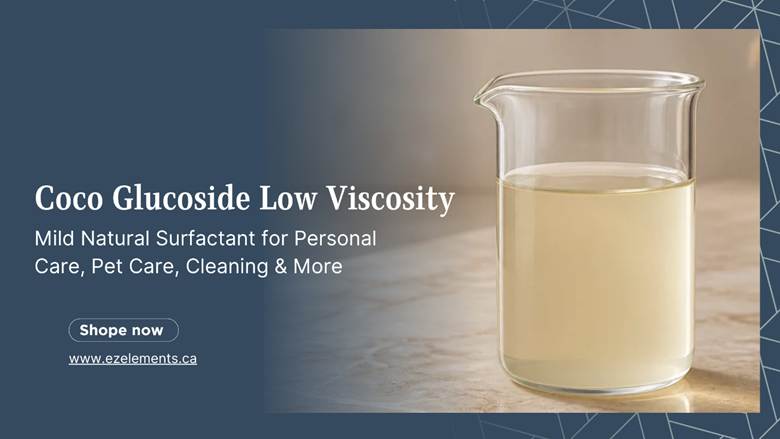
- Coco Glucoside Low Viscosity — Mild non-ionic surfactant that complements cetyl alcohol in shampoo and cleansing formulations as a gentle foaming and cleansing base.
Order or Enquire
Looking to buy Cetyl Alcohol (1698) in bulk? Contact EZ Elements for current pricing, full product documentation, and supply options across personal care, pharmaceutical, cleaning, and industrial applications. We supply formulators and manufacturers across Canada and North America. Reach out today to request a sample, Technical Data Sheet, or a bulk pricing quote for your next formulation project.