Product Overview
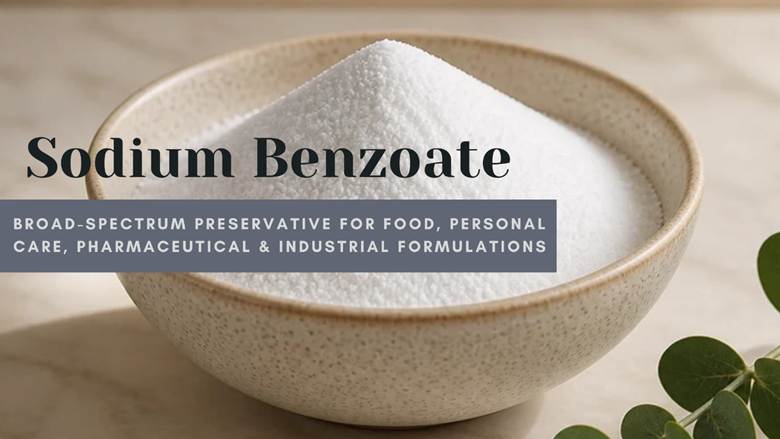
Sodium Benzoate is the sodium salt of benzoic acid, a naturally occurring organic acid found in many fruits, spices, and plant sources including cinnamon bark, apricots, prunes, and apples. Commercially, it is produced by neutralizing benzoic acid with sodium hydroxide under controlled conditions, resulting in a white, odorless, water-soluble crystalline powder with high purity and stability. Its INCI name is Sodium Benzoate, and its food additive identifier is E211 (internationally) or additive number 211 (globally).
Sodium Benzoate is one of the oldest and most widely approved preservatives in the world, first authorized by the FDA in the late 19th century. It functions as an antimicrobial agent by inhibiting the growth of bacteria, yeast, and mold — particularly in acidic environments where it converts to its active undissociated benzoic acid form (most effective at pH below 4.5). It is classified as GRAS (Generally Recognized as Safe) by the FDA and is approved internationally across food, pharmaceutical, personal care, and industrial applications. Its broad-spectrum efficacy, low-cost, high-water solubility, and excellent compatibility across formulation systems make it one of the most widely used preservatives globally.
Key Features & Benefits
- Broad-spectrum antimicrobial preservative — inhibits bacteria, yeast, and mold across food, cosmetic, pharmaceutical, and industrial formulations.
- Most effective in acidic pH environments (below 4.5) where it converts to undissociated benzoic acid, the active antimicrobial form.
- GRAS-classified by the FDA; approved internationally as food additive E211 and accepted across pharmaceutical and cosmetic regulatory frameworks.
- Highly water-soluble (660 g/L at 20°C), enabling easy incorporation into water-phase formulations across all industries.
- Synergistic with other preservatives — works particularly well in combination with potassium sorbate for broader pH coverage.
- Cost-effective and stable, providing reliable microbial protection without significant impact on product color, odor, or texture.
- Available in food-grade, pharmaceutical-grade, and technical-grade formats to meet the specific quality requirements of each application.
Applications
Sodium Benzoate is used across six industry categories served by EZ Elements, wherever reliable, cost-effective antimicrobial preservation is required.
- Carbonated soft drinks, fruit juices, and energy drinks — one of its most common global applications
- Pickles, relishes, olives, and vinegar-based condiments where acidic pH supports its antimicrobial efficacy
- Jams, jellies, fruit preserves, and marmalades to prevent yeast and mold growth
- Salad dressings, sauces, soy sauce, and other condiments requiring extended shelf life
- Fermented and acidified food products where low pH activates its preservative function
- Synergistic preservative blends combined with potassium sorbate for broader-spectrum food protection
- Shampoos, conditioners, and hair care products as a water-phase preservative (up to 2.5% in rinse-off products)
- Lotions, creams, and moisturizers where microbial protection of the water phase is essential
- Baby wipes, facial wipes, and cleansing wipes requiring effective but mild preservation
- Toothpaste and mouthwash formulations (up to 1.7% in oral care products)
- Eye creams, serums, and leave-on skin care formulations (up to 0.5% in leave-on products)
- Natural cosmetic formulations where it is used alongside citric acid or aloe vera juice as part of the preservative system
- Oral liquid formulations including syrups, suspensions, and elixirs as a recognized pharmaceutical preservative
- Topical creams, ointments, and gels where it contributes antimicrobial stability throughout shelf life
- Injectable formulations at controlled concentrations as specified in major pharmacopeias including USP and EP
- Medicated shampoos and dermatological preparations requiring preservative protection
- Oral care pharmaceutical products including medicated mouthwash and dental gels
- Preservative in liquid pet grooming products including pet shampoos, coat sprays, and conditioning rinses
- Pet wet wipes and ear-cleaning preparations requiring microbial preservation in water-based formats
- Animal feed and supplement formulations where sodium benzoate is used as a permitted feed additive preservative
- Natural and conventional pet care product lines using sodium benzoate in combination with aloe vera juice or potassium sorbate
- Household and professional cleaning product formulations where microbial stability of the liquid product is required
- Multi-surface cleaners, bathroom cleaners, and kitchen cleaning liquids as a preservative additive
- Liquid hand soaps and body washes in institutional and commercial cleaning contexts
- Wet wipe formulations for household surface cleaning and disinfection
- Corrosion inhibitor in engine coolants, antifreeze, and automotive fluid formulations — one of its major industrial applications
- Water treatment systems where it is used to control microbial growth in industrial water circuits
- Stabilizer in photographic processing chemicals and film development solutions
- Plasticizer and strength enhancer in certain plastic and polymer manufacturing processes
- Intermediate in chemical synthesis for the production of dyes, pigments, and specialty chemicals
Technical Specifications
| Property | Specification |
| INCI Name | Sodium Benzoate |
| CAS No. | 532-32-1 |
| Common Name | Sodium Benzoate, E211 |
| Appearance | White crystalline powder or granules; odorless |
| Assay (Purity) | 99.0% minimum (food and pharmaceutical grade) |
| pH (1% Solution) | 7.5 – 8.5 |
| Solubility | Freely soluble in water (660 g/L at 20°C); slightly soluble in alcohol |
| Effective pH Range | Most active below pH 4.5; active up to pH 7.0 at higher concentrations |
| Ionic Type | Anionic (sodium salt) |
| Origin | Benzoic acid (naturally occurring in fruits/spices) neutralized with sodium hydroxide |
| Recommended Use Level | 0.1% – 0.5% in cosmetics; up to 0.1% in food (regulatory limit varies by market) |
| Regulatory Status | GRAS (FDA); E211 (EU); approved in USP, EP, and major international pharmacopeias |
Why Choose EZ Elements as Your Supplier
EZ Elements supplies food-grade, cosmetic-grade, and pharmaceutical-grade Sodium Benzoate with verified purity, consistent quality, and complete regulatory documentation to support manufacturing across food and beverage, personal care, pharmaceutical, pet care, cleaning, and industrial applications in Canada and North America.
We supply food manufacturers, personal care brands, pharmaceutical formulators, pet care producers, cleaning product developers, and industrial clients across all applicable EZ Elements industry categories, providing:
- Full documentation: Technical Data Sheet (TDS), Certificate of Analysis (COA), and Safety Data Sheet (SDS)
- Multiple grade options — food-grade, pharmaceutical-grade, and technical-grade — to match your regulatory requirements
- Bulk supply with competitive, transparent pricing per kilogram
- Technical support on effective use levels, pH optimization, synergistic preservative combinations, and regulatory compliance guidance
Safety & Storage Guidelines
- Store in a cool, dry, well-ventilated area away from direct sunlight, heat, and moisture — hygroscopic; absorbs moisture if left unsealed.
- Keep containers tightly sealed after each use to maintain purity and prevent caking or moisture absorption.
- Avoid combining with Vitamin C (ascorbic acid) in finished formulations — this combination can produce benzene, a toxic compound.
- Use within regulatory-specified concentration limits for each application type and target market.
- Wear protective gloves and avoid inhalation of fine powder dust during handling.
- Refer to the applicable regulatory limits for your market — maximum permitted levels differ between food, pharmaceutical, and cosmetic applications.
Complete handling, first aid, and disposal instructions are provided in the Safety Data Sheet (SDS) available from EZ Elements upon request.
Frequently Asked Questions
Q1: Which industries use Sodium Benzoate?
Sodium Benzoate is used across six industries: Food & Beverages (preservative in soft drinks, juices, condiments, and processed foods), Personal Care (preservative in shampoos, creams, wipes, and oral care products), Pharmaceutical (preservative in syrups, topical preparations, and injectables), Pet Care (preservative in grooming products and animal feed supplements), Cleaning & Sanitation (preservative additive in liquid cleaning products), and Industrial (corrosion inhibitor in coolants, water treatment, photographic stabilizer, and plastic manufacturing).
Q2: Is Sodium Benzoate safe to use in food products?
Yes. Sodium Benzoate is GRAS-classified by the FDA and approved as food additive E211 internationally. It is one of the longest-approved food preservatives in regulatory history. The FDA permits its use in food at up to 0.1% concentration. It is most effective in acidic foods and beverages (pH below 4.5) and is widely used in soft drinks, fruit juices, pickles, and condiments. Regulatory limits vary by country, so formulators should verify applicable food additive regulations for their target market.
Q3: Why should Sodium Benzoate not be combined with Vitamin C in formulations?
When Sodium Benzoate is combined with ascorbic acid (Vitamin C) in the presence of water, a chemical reaction can occur that produces benzene — a known carcinogen. This reaction is of concern in acidic, water-based formulations such as fruit juices or vitamin-enriched beverages and cosmetics. Formulators should avoid combining these two ingredients in the same water-phase formulation unless thorough stability testing confirms benzene levels remain within safe regulatory limits. Alternative preservative systems should be considered for formulations that contain Vitamin C.
Q4: What is the difference between Sodium Benzoate and Potassium Sorbate as preservatives?
Sodium Benzoate and Potassium Sorbate are both widely used mild preservatives but differ in their spectrum of activity and optimal pH range. Sodium Benzoate is most active against bacteria and yeast at pH below 4.5, making it highly effective in acidic formulations. Potassium Sorbate provides broader antifungal activity and is effective at a slightly higher pH range (up to pH 6.5). Many formulators combine both preservatives synergistically to achieve broader-spectrum protection across a wider pH range in food, personal care, and pet care formulations.
Q5: What concentration of Sodium Benzoate is used in personal care products?
In personal care formulations, Sodium Benzoate is typically used at 0.1% to 0.5% of the total formula. Rinse-off products such as shampoos may use up to 2.5% as permitted by cosmetic regulatory standards. Leave-on products are formulated at lower levels, typically up to 0.5%. Oral care products including toothpaste and mouthwash may use up to 1.7%. Formulators should always work within the regulatory guidelines of their target market and verify limits with the applicable cosmetic regulation.
Q6: Where can I buy Sodium Benzoate in bulk in Canada?
Sodium Benzoate is available for bulk purchase from EZ Elements in food-grade, pharmaceutical-grade, and technical-grade formats, with supply options for manufacturers across food and beverage, personal care, pharmaceutical, pet care, cleaning, and industrial sectors in Canada and North America. Contact our team for pricing, documentation, or a product sample.
Related Ingredients
The following EZ Elements ingredients are commonly used alongside Sodium Benzoate across its application industries:
- Potassium Sorbate — Synergistic mild preservative with complementary antifungal activity; widely used in combination with Sodium Benzoate in food, personal care, pet care, and pharmaceutical formulations for broader-spectrum protection.
- Aloe Vera Juice — Natural botanical ingredient that frequently requires a preservative system including Sodium Benzoate; the two are commonly specified together in personal care and pet care formulations.
- Coco Glucoside Low Viscosity — Mild surfactant base for personal care and pet care products where Sodium Benzoate provides the preservation system for the water phase.
Order or Enquire
Looking to buy Sodium Benzoate in bulk? Contact EZ Elements for current pricing, full product documentation, and supply options across food and beverage, personal care, pharmaceutical, pet care, cleaning, and industrial applications. We supply manufacturers and formulators across Canada and North America. Reach out today to request a sample, Technical Data Sheet, or a bulk pricing quote for your next formulation project.